


The Mind They Celebrate, The Truth They Conceal




Linked Verses
Proverbs 9:10James 1:5Colossians 2:3Romans 1:21-221 Corinthians 3:19Daniel 2:21Job 28:28
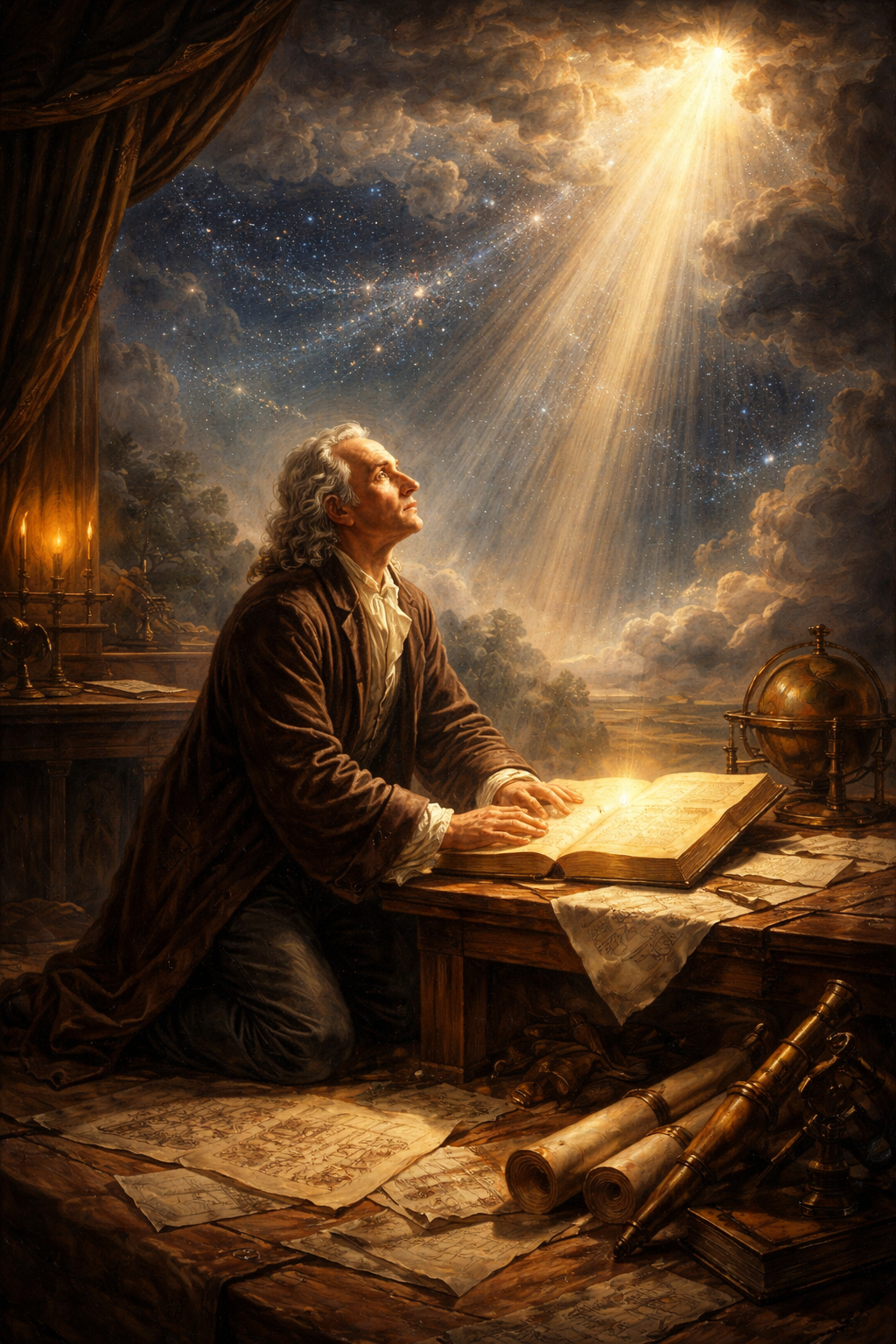
Concern Summary: There is a subtle but powerful pattern in how history is presented. Figures like Isaac Newton are remembered for their intellect, their discoveries, and their contribution to human progress, yet the foundation of their understanding is rarely explored. What is emphasised is the achievement, while what is omitted is the source.
This shaping of perception is not neutral. It reinforces the belief that wisdom originates within man, that knowledge is constructed rather than revealed, and that truth can be reached apart from God. Over time, this produces a culture that values intelligence but loses discernment, that pursues knowledge but drifts from truth.
The result is not merely incomplete education, but a reorientation of thought itself. When the source is removed, the vessel becomes the focus, and the glory that belongs to God is subtly transferred to man. This distortion aligns with a deeper spiritual reality, where truth is not always denied outright, but quietly displaced, leaving behind a version of understanding that appears complete, yet is fundamentally lacking.
Scripture Insight: Scripture consistently reveals that wisdom is not something man generates, but something God gives. It begins with reverence, not intellect, and flows from a right relationship with the Creator rather than from human reasoning alone. When man attempts to claim wisdom apart from God, what appears as knowledge often becomes folly, because it is disconnected from truth at its source.
There is also a pattern throughout Scripture where truth is obscured, resisted, or exchanged, not always through direct opposition, but through subtle shifts in focus. What is central is replaced with what is secondary, and over time, the absence of God becomes normalised. This reflects a deeper spiritual condition where the knowledge of God is present, yet not honoured, leading to a distortion of understanding.
True wisdom restores order by realigning man with God. It does not elevate the individual as the source, but positions him as a receiver of what has already been established by divine authority. In this light, even the greatest minds are not origins of truth, but witnesses to it, and their clarity is found not in independence from God, but in alignment with Him.
Sources:
The Newton Project — Newton’s Religious Writings
A valuable gateway into the theological side of Isaac Newton that is so often ignored. This collection helps readers see that his engagement with Scripture, prophecy, and doctrine was not a side interest, but a serious and sustained labor.
Explore the Newton Project’s religious writings collection
The Newton Project — Observations upon the Prophecies of Daniel and the Apocalypse of St. John
This is one of the most important sources for readers who want to examine Newton’s prophetic and biblical thought more directly. It opens the door to the very work that reveals how deeply he regarded divine revelation and the meaning of Scripture.
Read more at the Newton Project
Open Library — Observations upon the Prophecies of Daniel, and the Apocalypse of St. John
A helpful bibliographic source for readers who want to confirm publication details and trace the historical record of Newton’s work. It serves as a useful companion reference when presenting the book in an article or study.
View the Open Library record
Stanford Encyclopedia of Philosophy — Isaac Newton
A strong academic source for understanding the fuller picture of Newton’s intellectual life. It helps show that the common public memory of Newton is incomplete, and that his theological commitments formed a major part of his lifelong pursuit of truth.
Read the Stanford Encyclopedia entry
Encyclopaedia Britannica — Isaac Newton
A useful mainstream reference for how Newton is usually presented to the world. This source can help readers compare the standard scientific summary of his legacy with the deeper theological dimension that is often left unspoken.
Read the Britannica entry