


Intro Overview
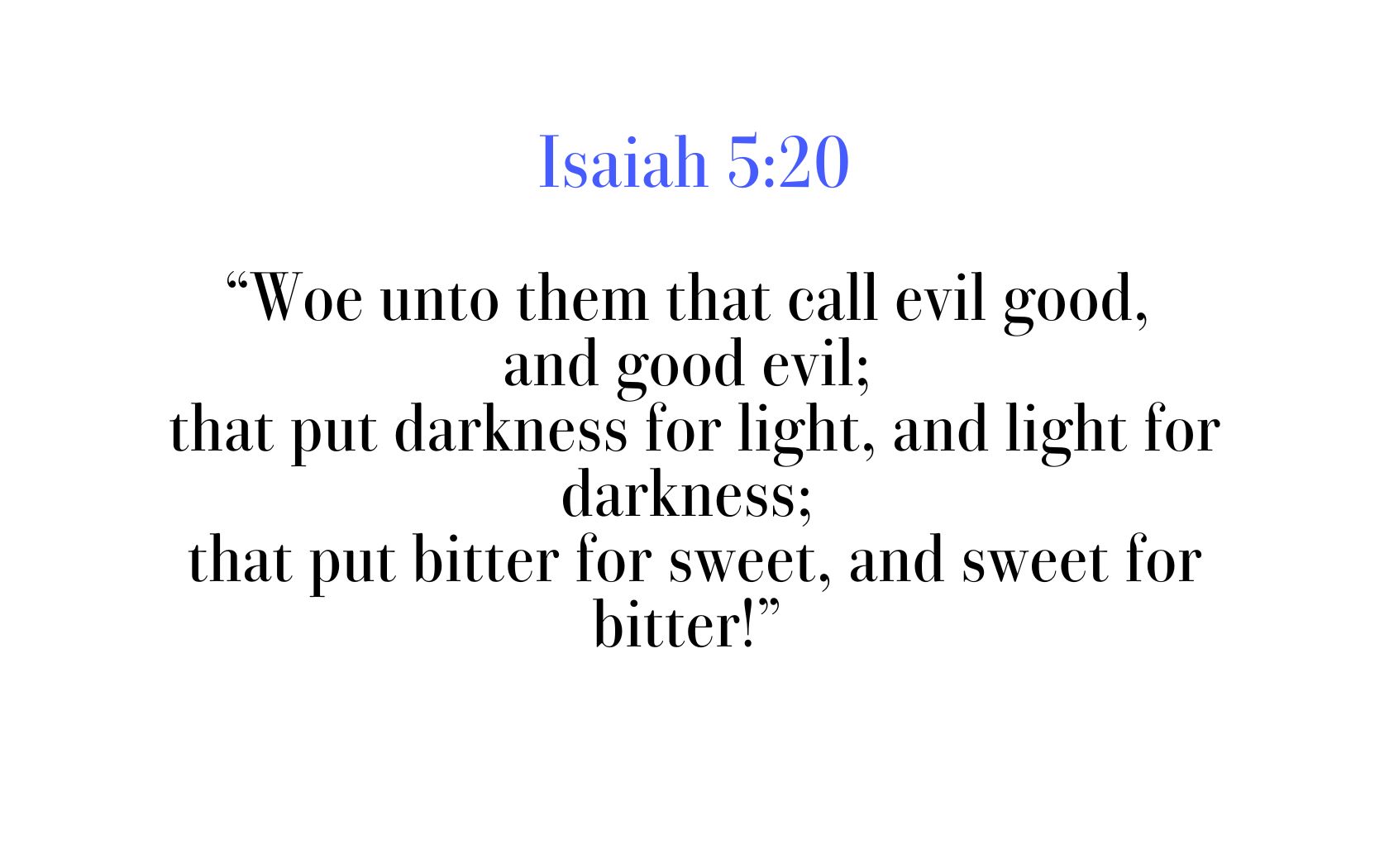
The prophet Isaiah spoke to a nation that had blurred the line between sin and righteousness — a reflection of our present age. Today, truth has been redefined by emotion, and morality rewritten by consensus. Evil parades as enlightenment, while holiness is branded intolerance. In media, education, and governance, darkness has been re-packaged as light, and the foundations of God’s Word replaced with the shifting sands of human pride.
This verse stands as a divine indictment against moral relativism — a warning that the redefinition of good and evil invites not progress, but judgment.
Devotional Overview
God’s Word does not evolve; it exposes. The measure of righteousness is not found in majority opinion but in divine revelation. When a generation celebrates sin as freedom and condemns conviction as hatred, the stage is set for deception to flourish. Yet those who walk in the Spirit are called to discernment — to love truth more than approval and to uphold righteousness even when the world calls it evil.
Let this verse be a mirror for the soul. Are we aligning our conscience with Scripture or with culture? To see clearly, we must first repent of our comfort with compromise.
Discernment Overview
The inversion of truth is not accidental — it is satanic. From secular humanism to postmodern relativism, the enemy’s strategy has always been to redefine good and evil until nothing sacred remains. The War for Truth rages not merely in politics or culture, but in hearts and pulpits. As in the days of Isaiah, judgment begins when nations no longer blush at sin.
Yet this is also the Church’s moment of clarity. We are called to expose deception, not echo it; to stand for the absolute authority of Scripture when the world demands neutrality. The dividing line is being drawn — between those who uphold the Word and those who distort it.