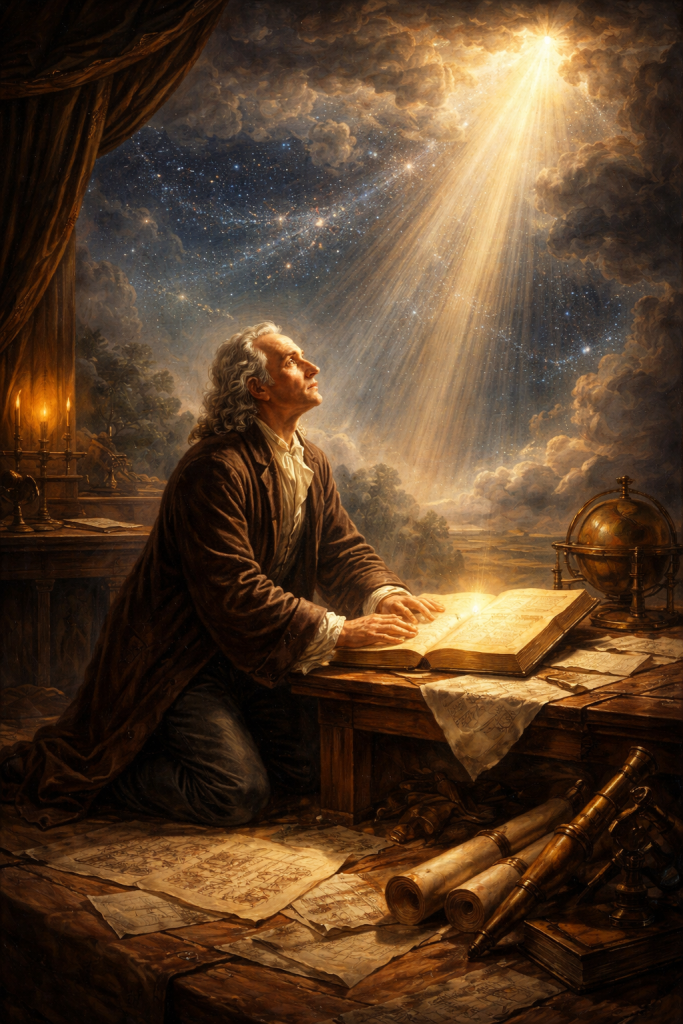
Concern Summary: There is a subtle but powerful pattern in how history is presented. Figures like Isaac Newton are remembered for their intellect, their discoveries, and their contribution to human progress, yet the foundation of their understanding is rarely explored. What is emphasised is the achievement, while what is omitted is the source. This shaping of perception is not neutral. It reinforces the belief that wisdom originates within man, that knowledge is constructed rather than revealed, and that truth can be reached apart from God. Over time, this produces a culture that values intelligence but loses discernment, that pursues knowledge…

Concern Summary: The modern cultural shift toward subjective truth and consensus-driven morality increasingly reframes conviction as intolerance and clarity as confrontation. As objective truth becomes marginalized, individuals who stand firmly in biblical truth may experience social, professional, and relational pressure to compromise or remain silent. This environment fosters confusion, discourages moral courage, and subtly conditions society to reject divine authority in favor of human perception. Scripture Insight: Scripture consistently reveals that truth has never been universally accepted, because truth exposes both sin and misplaced authority. When individuals align themselves with God’s Word, they often encounter resistance not merely from people,…

Concern Summary: Modern culture increasingly teaches that truth is personal, fluid, and self-authored. Identity, morality, and meaning are framed as discoveries of the self rather than realities revealed by God. This shift subtly removes all external authority and replaces submission with self-sovereignty. When truth becomes negotiable, conviction is rebranded as intolerance and obedience is dismissed as oppression. This deception does not openly reject God but quietly replaces Him, preserving spiritual language while emptying it of authority and accountability. Scripture Insight: From the beginning, truth has never originated within humanity but has always been revealed by God. Creation itself reflects divine…

Concern Summary: Modern “religious equality” is celebrated as fairness and tolerance, but in practice it operates as a neutralizing force that flattens truth into preference. By insisting that all beliefs are equally valid, society dismantles the idea that any belief can claim objective truth. This cultural neutrality doesn’t protect conscience—it subjects all convictions, especially Christianity, to bureaucratic management, reducing truth to what institutions will approve rather than what God reveals. The result is not pluralism, but power determining what may be believed, said, or silenced. Scripture Insight: The push for religious equality reflects a deeper spiritual compromise: the refusal to…

Concern Summary: Every human being carries within them a built-in, innate knowledge of God inscribed by the Creator at creation. While Scripture indeed affirms natural revelation — “that which may be known of God is manifest in them” (Romans 1:19-20) — there is a hermeneutical danger when this general awareness is elevated or misunderstood as a salvific or self-sufficient knowledge of God. In contemporary ideology, “knowledge of God” can be co-opted into a universalist or innate spirituality narrative that downplays the necessity of Christ, Scripture, and divine revelation for true salvation. The result can be a subtle shift toward naturalistic…

Intro OverviewThe world wages an endless war against truth, yet all its resistance is built upon the very foundation it seeks to deny. Christ is not one truth among many—He is the Truth, the cornerstone of creation and redemption. Every moral law, every principle of justice, every pulse of conscience finds its origin in Him. When a culture rejects this foundation, chaos follows. Like a house built on sand, ideologies that abandon the authority of Christ will collapse under the weight of their own rebellion. The shifting philosophies of men cannot displace the eternal Word that spoke them into existence.…

Intro OverviewPsalm 14:1 unveils the spiritual core of unbelief. The fool does not lack intelligence; he lacks humility. His heart, not his mind, rejects God. The denial of the Creator is the ultimate act of pride — the elevation of self as the highest authority. Modern culture mirrors this ancient folly, exalting man as the measure of all things while erasing the One who gives life meaning. From academia to governance, “There is no God” has become the unspoken creed of progress. Yet this supposed freedom from faith has enslaved humanity to moral confusion, corruption, and despair. A civilization that…
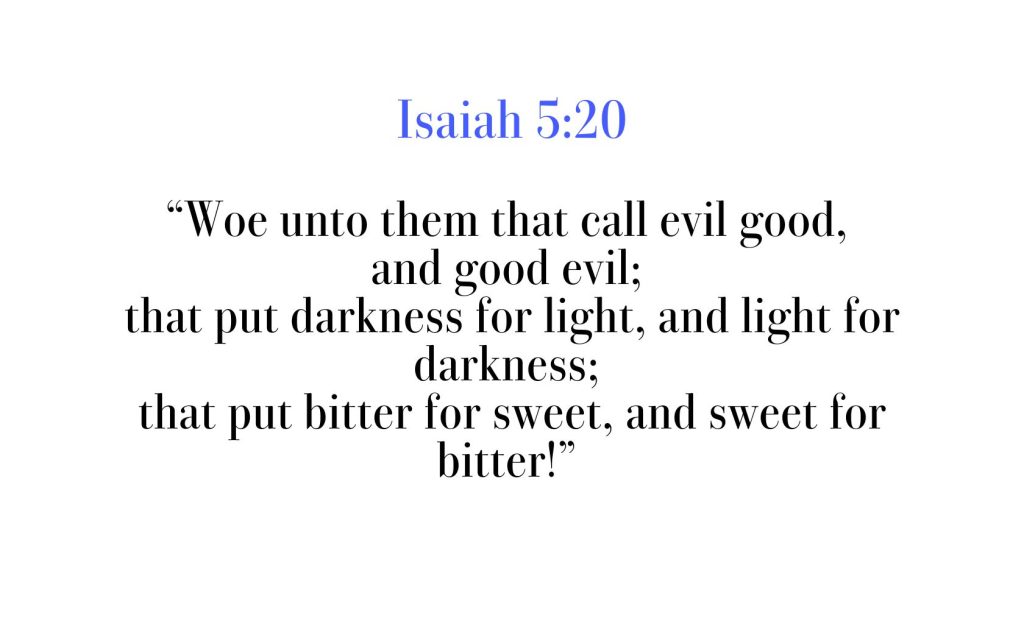
Intro OverviewThe prophet Isaiah spoke to a nation that had blurred the line between sin and righteousness — a reflection of our present age. Today, truth has been redefined by emotion, and morality rewritten by consensus. Evil parades as enlightenment, while holiness is branded intolerance. In media, education, and governance, darkness has been re-packaged as light, and the foundations of God’s Word replaced with the shifting sands of human pride. This verse stands as a divine indictment against moral relativism — a warning that the redefinition of good and evil invites not progress, but judgment. Devotional OverviewGod’s Word does not…


